
Why Can a Tooth Feel Different After a Filling? What Richmond Patients Should Know
A filling repairs a tooth affected by decay or damage, but the tooth may not feel the same immediately afterward. Some people notice sensitivity to cold or pressure. Others feel that the tooth hits differently when they bite down.
A change in sensation does not automatically mean something went wrong. The tooth and surrounding tissues can take time to settle after treatment. Still, persistent or worsening symptoms deserve attention because sensitivity can have several causes, including decay, worn fillings, cracks, gum problems, and exposed tooth roots.
Understanding what can happen after treatment makes it easier to tell the difference between a temporary change and something that needs another dental evaluation.
Why a Tooth May Feel Different After a Filling
A filling changes part of the tooth's structure. Even when the restoration is doing exactly what it should, the tooth may feel different for a while. The sensation can depend on several factors, including:
- How deep the original decay was
- How much tooth structure was affected
- Where the filling was placed
- Whether the tooth was sensitive before treatment
- How the upper and lower teeth meet after the restoration
Cold sensitivity is one possible symptom. Pressure or chewing sensitivity can also occur.
The important point is that there isn't one standard reaction that every patient should expect. Your dentist can assess the tooth if the change doesn't settle or if the symptoms become more noticeable.
Sensitivity and Bite Changes Are Two Different Concerns
A patient might describe a tooth as simply feeling "off," but that description can refer to different things.
Sensitivity may involve a quick response to something cold or hot. Bite discomfort may feel more like pressure when the teeth come together or when you chew.
Those differences matter because they can point the dentist toward different areas to evaluate.
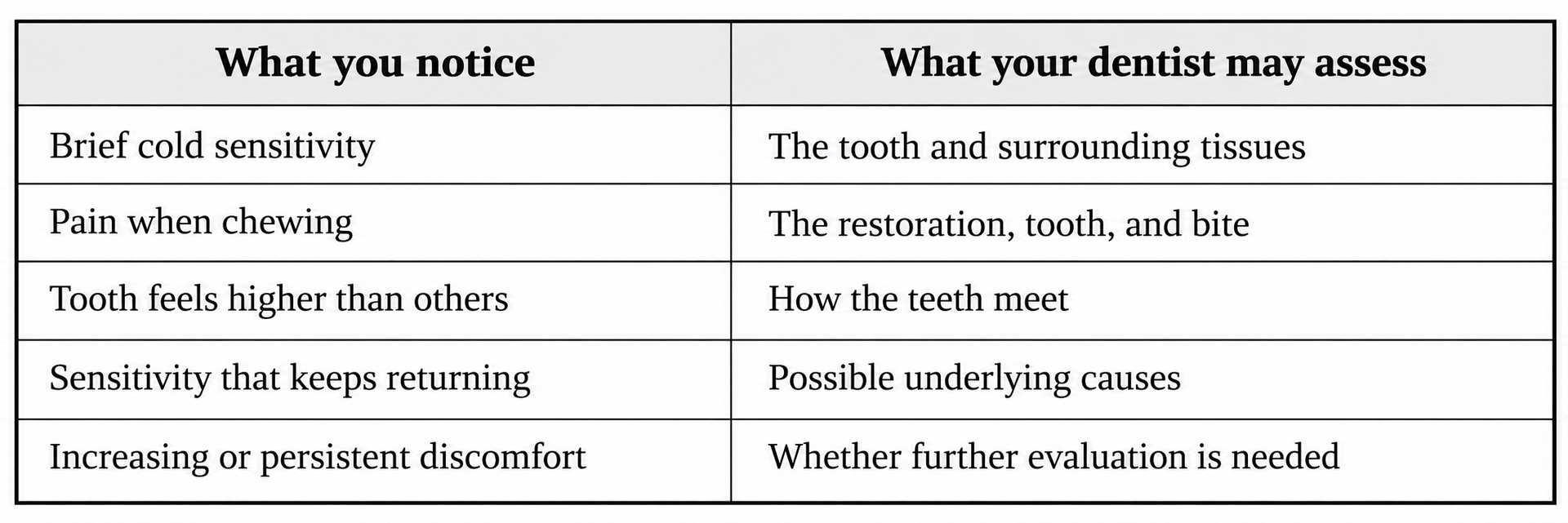
This doesn't mean a particular symptom confirms a specific problem. A dental examination is needed to determine what is actually happening.
When Should a Filling Feel More Natural?
There isn't one exact timeline that applies to every filling. A tooth that was already sensitive before treatment may behave differently from a tooth with a smaller area of decay. The depth and location of the restoration can also matter.
For patients receiving teeth fillings in Richmond, it can help to pay attention to whether the sensation is improving, staying the same, or becoming more noticeable. A temporary change that gradually settles is different from pain that continues to interfere with eating or normal daily activities.
If the tooth still feels noticeably different after the initial adjustment period, contacting the dental office gives the dentist an opportunity to determine whether the restoration and tooth are responding as expected.
What If the Tooth Feels High When You Bite?
One specific complaint after a filling is that the restored tooth seems to make contact before the other teeth. That can make chewing feel uncomfortable. You may notice it when you close your teeth together or bite into firmer foods.
The dentist can examine how the teeth come together and determine whether the restoration needs attention. This is one reason it is useful to describe exactly what you are feeling rather than simply saying that the filling "hurts."
Try to explain:
- Whether the discomfort occurs when biting or when releasing the bite
- Whether cold or hot foods trigger it
- Whether the tooth hurts without being touched
- Whether the sensation is improving
- Whether the tooth feels higher than the others
Those details can help your dentist understand what needs to be checked.
When Is It Worth Calling the Dental Office?
Some sensitivity can occur after dental treatment, but you don't have to guess whether your symptoms deserve attention. A call is especially reasonable when discomfort is persistent, worsening, or interfering with normal activities.
At Glenside Dental, we can evaluate the tooth and determine whether the symptoms need further attention.
You should also contact the office if:
- Pain becomes stronger instead of improving
- The tooth hurts when you chew
- Sensitivity continues without improvement
- The filling feels loose or damaged
- You notice swelling
- The tooth develops significant spontaneous pain
Sensitivity can have many causes, so persistent symptoms should not simply be assumed to be a normal reaction to a filling. The ADA notes that treatment depends on the underlying cause of tooth sensitivity.
Choosing the Right Follow-Up Matters
If you're looking for a teeth filling clinic Richmond patients can contact about a change after treatment, the most useful step is to explain what you are experiencing rather than trying to diagnose it yourself.
Located in Richmond, Glenside Dental provides a convenient option for local patients who need a filling checked or want to discuss a change they have noticed after treatment. We can examine the tooth, review the restoration, and determine whether the symptoms need further attention. We can also explain whether what you're experiencing appears consistent with normal post-treatment sensitivity or whether the tooth needs a closer look.
The same applies when considering teeth filling treatment Richmond patients may need for a new cavity or an existing restoration that requires attention. The appropriate approach depends on the tooth and the condition being treated.
Conclusion
A tooth may feel different for a short time after a filling, but that doesn't mean the restoration has failed. What matters is how the tooth responds over time. If sensitivity or discomfort gradually improves, it may simply be settling after treatment. If the symptoms persist, worsen, or make chewing uncomfortable, it's worth having the tooth checked.
For patients seeking teeth fillings in Richmond, paying attention to these changes can help you know when to schedule a follow-up rather than waiting for the problem to become more noticeable. Glenside Dental serves patients in Richmond and nearby communities, making it easier to have a filled tooth evaluated when something doesn't feel quite right.