
What Should You Ask Your Dentist Before Choosing Tooth Extraction

Hearing that a tooth may need to be removed can leave you with more questions than answers. You may be wondering whether extraction is really necessary, whether another treatment could work, or what removing the tooth would mean for you afterward.
You don't need to walk into the appointment knowing which treatment you want. A better starting point is understanding the problem well enough to have a useful conversation with your dentist. If you're considering tooth extraction in Richmond, these are some of the questions worth asking before making a decision.
Ask What Is Happening to the Tooth
Start with the simplest question: What is wrong with this tooth?
Your dentist may be looking at decay, a crack, an infection, damage from an injury, or another problem. What matters is understanding the specific reason extraction has entered the conversation.
Ask your dentist to explain what they can see and whether the problem affects just the visible tooth or extends into the root, gums, or surrounding bone.
You can also ask:
- How extensive is the damage?
- Is the tooth still functional?
- What does the X-ray show?
- Is the problem getting worse?
- What would happen if we waited?
These questions can give you a clearer picture before you start weighing treatment options.
Find Out Whether Keeping the Tooth Is Realistic
Not every damaged tooth needs to be removed. At the same time, trying to preserve a tooth isn't always the most predictable choice. The important word here is realistic.
Depending on the problem, your dentist may discuss restorative treatment, root canal treatment, periodontal care, or another approach. The condition of the remaining tooth structure and the surrounding tissues can affect whether one of these options is likely to work.
Rather than asking only, "Can you save it?" ask: "What would saving this tooth involve, and how predictable would that treatment be?"
That gives you more useful information than simply hearing that an alternative exists.
At Glenside Dental, we can talk through the condition of the tooth and the treatment options that may apply to your situation. The goal is to make sure you understand why a particular approach is being considered before treatment begins.
Ask What the Treatment Would Involve
If extraction is recommended, ask your dentist to explain what the appointment will actually involve. The approach can depend on the tooth's location, condition, roots, and other clinical factors. Your dentist can explain how the area will be numbed and whether the extraction is expected to be straightforward or require a more involved approach.
It can help to know what sensations to expect, too. Local anesthesia is used to numb the area during an extraction. You may still notice pressure or movement even though the area is numb. The ADA also recommends following your dentist's instructions carefully after the procedure to support healing. Before leaving the appointment, make sure you understand the basic aftercare instructions.
Don't Forget to Ask About the Empty Space
One question can easily get pushed aside:
What happens after the tooth is gone?
The answer depends on which tooth is being removed and your individual circumstances. Some spaces may eventually be restored with an implant, bridge, or removable partial denture.
In other situations, your dentist may recommend monitoring the area rather than replacing the tooth immediately. You don't necessarily have to decide on replacement at the same appointment. But knowing that there may be a second stage to your treatment can help you plan.
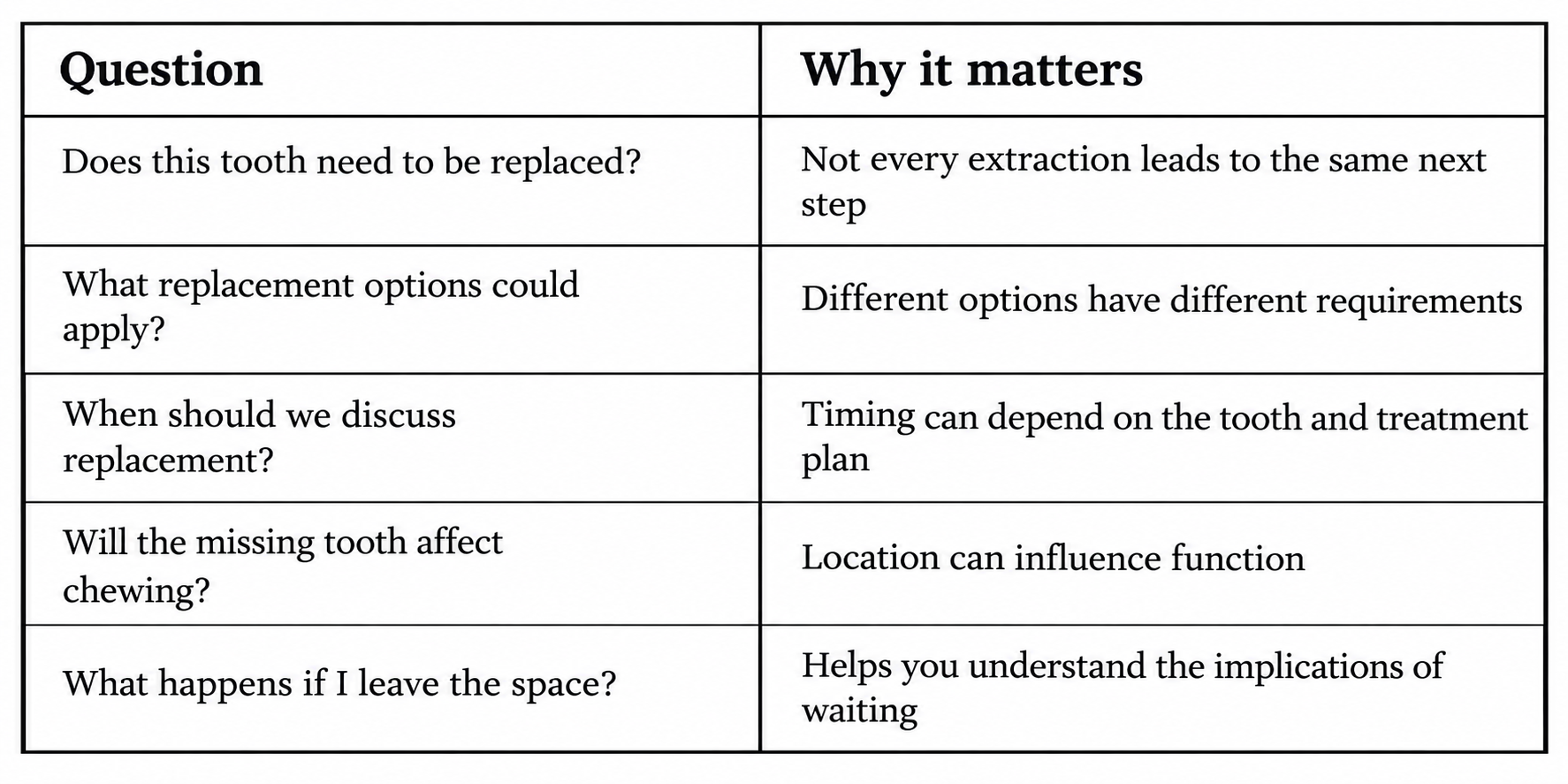
The right answer will depend on your mouth, so this conversation should happen with your dentist rather than being based on a general rule.
Tell Your Dentist About Your Health and Medications
Your dental team also needs to know about relevant medical information before an extraction. Tell them about medications you take, allergies, medical conditions, and recent changes to your health. Some medications and health conditions can affect dental treatment or the instructions you receive afterward. If you're unsure whether something matters, mention it anyway.
You can bring a current medication list to your appointment so you don't have to rely on memory. This is especially useful if you take several medications or have recently started something new.
Know What Would Make You Call Afterward
Before the procedure, ask what your dentist considers normal during healing and which symptoms should prompt a call.
That way, you aren't trying to work out whether something is concerning after you get home.
Your dentist may give you specific instructions about:
- Eating and drinking
- Brushing and cleaning the area
- Physical activity
- Pain relief
- What to avoid while the area heals
- When to schedule a follow-up
- Which symptoms require a call to the office
Your instructions may differ depending on the extraction and your health, so follow the guidance given for your specific case.
Give Yourself Time to Understand the Decision
Sometimes an extraction recommendation is straightforward. Other times, there are several factors to consider. If you're unsure, ask your dentist to explain the options again in plain language. You can ask what they would need to see to choose one treatment over another and what the consequences of waiting might be.
You don't need to turn the appointment into a long list of questions. A few focused ones can make a big difference. For patients considering tooth extraction in Richmond, VA, the most useful conversation is one that connects the condition of the tooth with the treatment plan that follows.
At Glenside Dental, we can help you understand what we're seeing and discuss the options that may apply to your tooth. Our Richmond office is also convenient for patients in the surrounding communities who need an evaluation before deciding what to do next.
Conclusion
A recommendation for extraction doesn't have to leave you wondering whether you're making the right decision. Start by asking why the tooth needs to come out, whether keeping it is realistically possible, what the procedure involves, and what happens after the tooth is removed.
You may not need every treatment option available. You simply need enough information to understand the recommendation and decide what questions still need an answer.
If tooth extraction in Richmond is being considered, a clear conversation with your dentist can help you understand the condition of the tooth and the plan for your care before you move forward.