
Dental Crowns & Implants: Same-Day Options, Longevity & Tooth Replacement

Crowns restore damaged teeth, while dental implants replace missing roots and anchor new teeth. Same-day crowns can shorten treatment to one visit when the case suits it. The right choice depends on tooth condition, oral health, your goals and long-term upkeep.
Understanding your tooth restoration options can help you decide which treatment fits your oral health, goals and long-term needs. A damaged tooth and a missing tooth call for different care. A crown protects a tooth with enough healthy structure left, while an implant supports a replacement when the original is gone.
At Glenside Dental in Richmond, VA, we offer restorative care including same-day crowns and dental implants, and the right fit depends on what we find during your examination.
What Are Same-Day Dental Crowns and How Do They Work?
They're custom restorations designed and placed in one appointment when the tooth suits it. Digital scanning and in-office CAD/CAM technology let us design, make and fit a crown without waiting for an outside laboratory.
What Happens During the Appointment?
With a same-day crown, we first examine and prepare the tooth, removing damaged structure. A digital scan records the tooth and your bite, the crown is designed and made, and we check the fit and bite before securing it. Whether one visit is possible depends on the tooth and our assessment.
Is a Same-Day Crown Right for Everyone?
Not always. The extent of damage, any other procedures needed and the right material all shape the plan, and we'll tell you honestly whether one visit is realistic or treatment should happen in stages.
How Long Do Same-Day Dental Crowns Last?
A same-day crown can last many years. Lifespan depends on material, fit, bite forces and upkeep, and being made in one visit doesn't automatically make it less durable than a laboratory-made crown.
What Can Affect Crown Longevity?
Clenching or grinding stresses the restoration, plaque at the crown's edge can cause gum problems or decay, and different materials have different limits. Regular checkups spot wear early. The American Dental Association's guidance on dental crowns explains how crowns protect damaged teeth.
How Can You Help a Crown Last Longer?
Brush twice a day, clean between your teeth daily, keep routine appointments and avoid chewing ice. Tell us about a crack, a loose crown or a change in your bite.
When Do I Need a Dental Crown?
Your dentist can explain which tooth restoration options are suitable based on how much healthy tooth structure remains. We may recommend a crown when a tooth needs more protection than a filling can give. It covers the visible part of the tooth and restores shape, strength and function.
Common Reasons for a Crown
Typical reasons include extensive decay or a large filling, a crack or break, root canal treatment needing further restoration, and significant wear. Smaller damage may only need a filling.
What If the Tooth Is Damaged Below the Gumline?
Sometimes too little tooth shows to hold a crown, and exposing more of it may come first. Our crown lengthening page explains this.
Who Is a Good Candidate for Dental Implants?
Good candidates for dental implants typically have healthy gums, enough jawbone and health that allows healing after surgery. Age alone doesn't decide it.
What Does the Dentist Assess?
We look at your gums and remaining teeth, your jawbone, medical history and medications, tobacco use, and where the tooth is missing. Some patients need gum treatment or a bone graft first; others suit a bridge or denture better. The ADA's patient guide to implants outlines the general stages.
What Does the Dental Implant Procedure Involve?
The implant is placed in the jawbone and given time to integrate, then we attach the planned restoration, such as a crown. The process can take several months. Our dental implant treatment in Richmond, VA page has more, and an assessment will show whether implants suit you.
How Long Do Dental Implants Last?
Many last decades, though no lifespan is guaranteed, and the implant may outlast its crown.
What Influences Implant Longevity?
Gum health, bone support, hygiene, smoking, bite forces and monitoring all play a part. An implant can't decay, but surrounding tissue can become inflamed, so problems need attention even when the new tooth looks fine.
Does the Implant Crown Need Replacement?
Possibly. The crown can wear, chip or loosen, and since the post and visible tooth are separate parts, they rarely need work on the same schedule. If the area bleeds, swells or hurts, contact us.
What Is the Difference Between Dental Implants, Bridges, and Dentures?
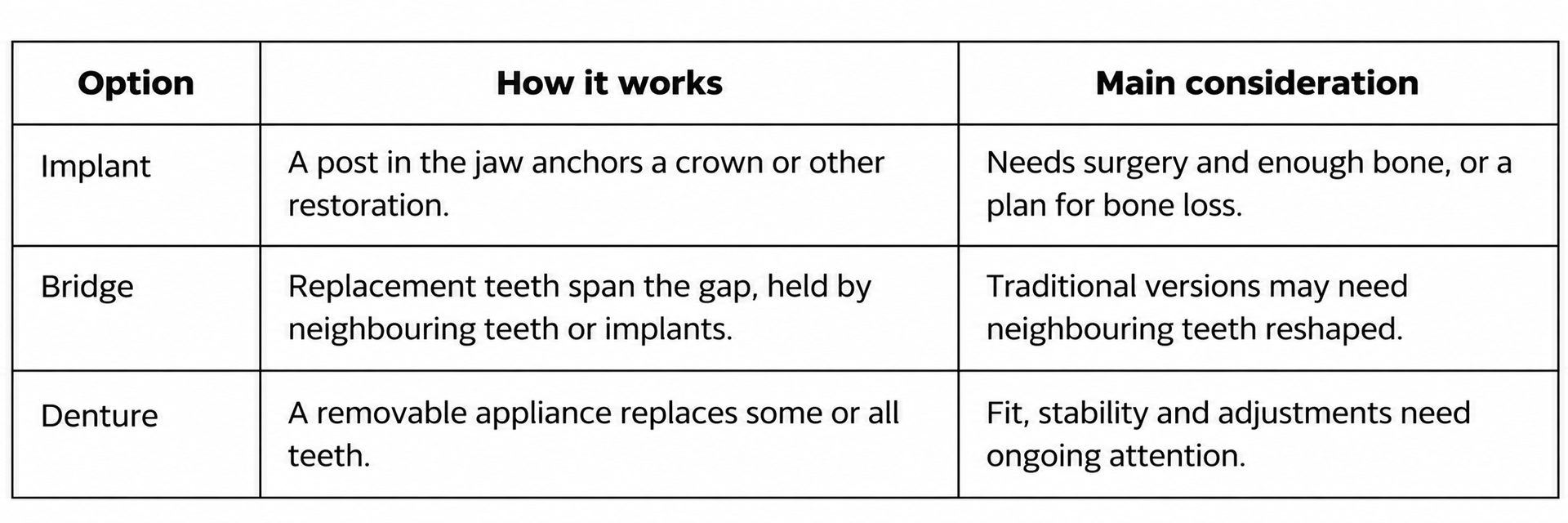
Comparing these tooth restoration options means looking at comfort, maintenance, treatment time and the condition of nearby teeth. An implant sits in the jawbone, a traditional bridge leans on neighbouring teeth and a denture is removable. The right choice depends on how many teeth are missing, your oral health, budget and preferences.
How Should You Choose?
Ask how each option affects nearby teeth, chewing, cleaning and future upkeep. Dental implants may suit you if preserving neighbouring teeth matters most; other cases may favour a bridge or denture.
Choosing the Right Restoration for Your Tooth
Same-day crowns can reduce the visits needed to restore a suitable damaged tooth. Implants suit missing teeth but involve surgery and healing, and bridges or dentures may serve some patients better. At Glenside Dental in Richmond, VA, we'll help you compare tooth restoration options and understand the care each one requires
Frequently Asked Questions
Can a same-day crown be placed after a root canal?
Sometimes, depending on the tooth and our assessment.
Does a dental crown cover the entire tooth?
It covers the visible part of a prepared tooth, not a missing root.
Can dental implants replace several missing teeth?
Yes, through crowns, bridges or implant-supported dentures.
Do dental implants need special cleaning?
They need daily cleaning and professional monitoring, and we can recommend tools suited to your restoration.
Can I get a dental implant if I have bone loss?
Yes, possibly after evaluation or bone grafting.